Your dental health.
Seen in the bigger picture.
Explore an approach that considers your health history, dental material choices, and the preservation of natural tooth structure.

Health history. Material choices. Natural tooth structure.
What makes this approach thoughtful?
Three ideas shape how the practice considers your care. Each connects to services you can explore in more depth.

Your health in context.
Your relevant health history and dental concerns help inform a conversation about appropriate care. Understanding your background is part of how the practice considers your dental health alongside your broader wellness goals.
Oral health & overall healthMaterials discussed with you.
The practice offers tooth-colored, metal-free, and BPA-free restorative options, including ceramic crowns, bridges, inlays, and ceramic zirconia implants. Material choices are discussed individually, since no single material is universally suitable for every person or clinical situation.
Explore dental materialsRespect for natural tooth structure.
Biomimetic dentistry uses adhesive techniques and ceramic materials intended to behave similarly to natural tooth layers, conserving as much enamel and dentin as possible. Whether a conservative approach is appropriate depends on assessment of the tooth, bite, and extent of damage.
Explore biomimetic dentistryCare for Children & Adults
We provide holistic dental care for children and adults, with recommendations based on age, oral health, medical history, and individual needs. Parents are welcome to discuss their child’s dental development, preventive care, and material options with Dr. Piela.
Mercury- & Fluoride-Free Dentistry
Our practice offers mercury- and fluoride-free dentistry. We discuss dental materials, preventive care, and home-care preferences as part of an individualized approach. Patients with existing silver amalgam fillings can ask about evaluation and removal when appropriate.
Nutrition & Oral Health
Food choices and daily habits are part of the conversation about oral health at our practice. Dr. Piela discusses nutrition alongside preventive care and individual dental needs. Nutritional guidance complements appropriate dental treatment.
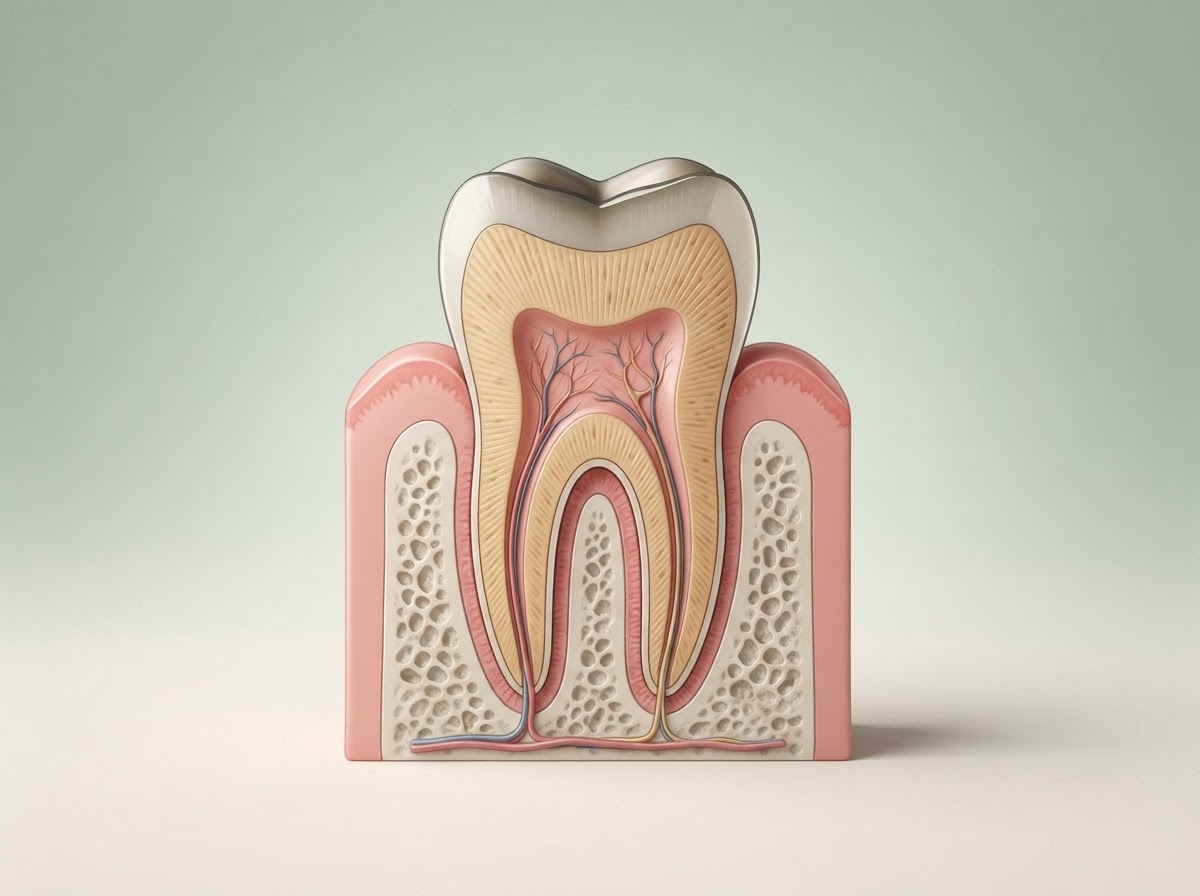
Illustrative educational model. Use the controls to read about each part.
Understanding the tooth you want to preserve.
A natural tooth is built in layers. Choose a topic to read a short, plain-English explanation of how the practice thinks about preserving and restoring it.
Enamel is the hard, mineralized outer shell that protects the crown of the tooth. It has no living cells, so once it is lost to decay or wear it does not grow back. Biomimetic care prioritizes preserving as much of your original enamel as possible, removing only what is necessary for a sound restoration.
What would you like to understand better?
Choose a topic to read a short explanation, see useful questions to bring to a visit, and find related services. This is educational navigation, not a personal recommendation.
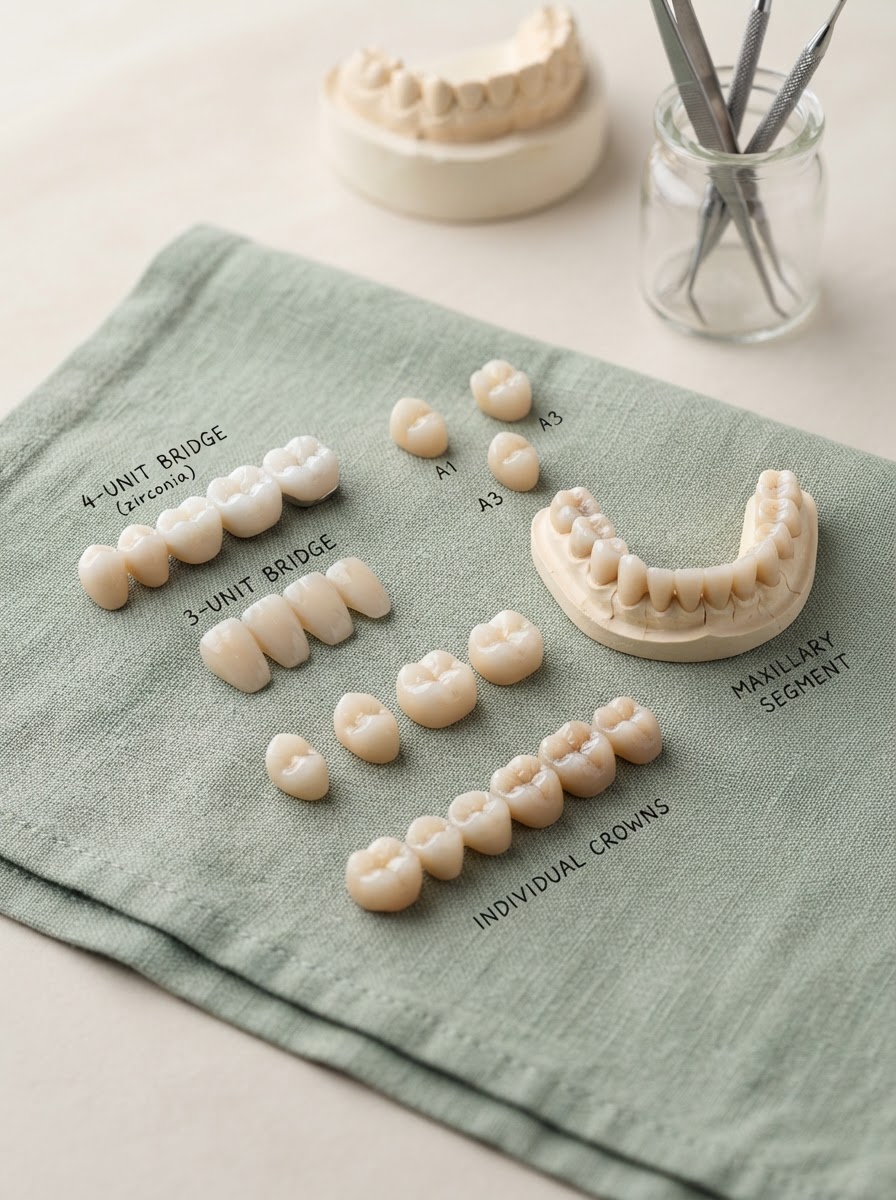
Dental materials
The practice offers tooth-colored, metal-free, and BPA-free restorative options, including ceramic crowns, bridges, inlays, and ceramic zirconia implants. Material choices are discussed individually, as no material is universally suitable for every person or clinical situation.
Questions to ask at your visit
- Which restorative materials are offered at the practice?
- How are material sensitivities or preferences discussed?
- What ceramic options are available for crowns and implants?
Bring your questions. Explore your options.
You're welcome to share your concerns and discuss the options that may be appropriate for you. Any examination or imaging depends on your individual needs.